
Biometric Borders: What you need to know about the new EES rules
Published on: October 13, 2025
by Admin2 Admin2
What is the EES (Entry/ Exist System)?
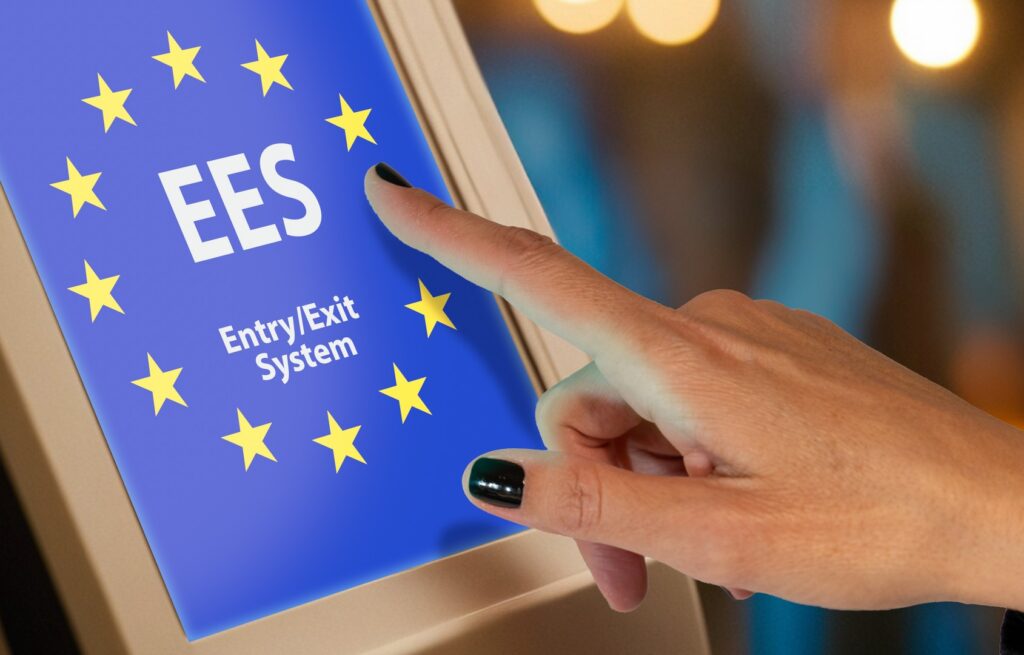
EES stands for the Entry/ Exit System, it is a new electronic border control system adopted by the European Union for non-EU nationals entering or leaving the Schengen Area. The new system replaces traditional practices of stamping passports.
Under EES, all travellers from outside the EU are required to provide biometric data (fingerprints and a digital phot) on their first entry after the new rules come into effect. Subsequent border crossings will involve cross checking the biometric data rather than re-stamping your passport. EES is part of the EU’s broader modernisation of border management. It is aimed at improving security, better tracking of overstays, streamlining border crossings and preventing identity fraud.
It is distinct from ETIAS (the European Travel Information and Authorisation System), which is a future pre-travel authorisation for visa-exempt travellers. ETIAS is expected later in 2026).
When did (or will) EES come into force?
The official start date for EES is 12 October 20025, this is when EES is gradually being deployed at external Schengen Borders. The system will be introduced in a phased process over six months. It is expected to have full operational coverage by April 2026.
During this transition period, not every border crossing point or route may yet have full EES capability, so in some cases travellers may still see legacy procedures in place. Once fully implemented, manual passport stamps for non-EU nationals will generally stop.
Who does EES apply to (in the French/ Schengen context)?
EES applies to all non-EU nationals who are travelling for short stays, e.g. up to 90 days within any 180 day period) in the Schengen zone, which includes France. This includes travellers from visa-exempt counties (e.g. UK, US, Canada, Australia, Japan etc.) as well as those who do require a short-stay visa.
However, children under 12 years old are exempt from fingerprinting (though their photo is still taken). People will long-stay visas or residence permits (e.g. residents of France in other EU Countries) are generally exempt from EES.
If you have already provided fingerprints for a visa application (for those that need a visa), the EES will not require separate fingerprinting (as the data is already held).
What Travellers to France (or via France) need to know?
Registration at border
On your first entry into France after the launch of EES, you must register at an EES kiosk or border booth. Follow signs to EES kiosks. You will scan your passport, have your photo taken (you will need to remove hats, glasses, facemasks for the photo), and (over 12 years old) provide fingerprints.
On subsequent entries/ exits, border officers or automated gates will compare your biometrics to that stored record.
There is no pre-registration required by travellers before departure.
There is no cost to travellers for the EES process.
Because of the new steps, there is a possibility of slight delays at border checks – especially in the transition phase.
Impact for UK – France (e.g. via Channel crossing/ Eurostar/ Air)
UK travellers are among those affected since Britain is non-EU/ Schengen.
Certain French airports (Paris-Charles de Gaulle, Paris‐Orly) have announced EES registration kiosks from 12 October.
For travellers by ferry, Eurostar, or Eurotunnel: pre-registration kiosks will be installed at UK departure points (e.g. Dover, Folkestone, St. Pancras) before crossing into the Schengen zone.
For instance, the Eurotunnel service acknowledges EES will apply to non-EU nationals and is adjusting operations accordingly.
Other practical impacts & tips
Allow extra time at borders: even though officials aim to make the process smooth, the biometric registration step may add a few minutes to your crossing.
Check border readiness: not all border points or airports may be fully equipped right at launch. If you have flexible route options, you might choose a border point known to have EES booths early on.
Document validity and consistency: ensure your passport is valid for your entire trip, and travel with the same document you registered under; changes or replacements may require re-registration.
Track your 90/180-day allowance: EES will track your entries and exits automatically. Use EU / Schengen calculators or official tools to monitor your remaining allowance.
Be patient and follow instructions: border staff will guide you through the process at kiosks or gates.
Children under 12 don’t need fingerprints but still have photo registration.
Special cases: If you’re a resident in France or hold a long-stay visa, or other exemptions apply, you may be exempt from EES checks.
What to do now for travelling to France?
- Don’t panic — the process is new but will be managed by border control staff.
- Leave extra time for border crossings in 2025–2026, especially during the transition.
- Use the correct passport/document and keep it consistent throughout the trip.
- Know your rights & obligations — e.g. if you’re a resident, you may not need the EES registration.
- Check border facilities in your route — major airports and crossings are being upgraded first.
- Track your permitted stay — because the system will track entry/exit automatically, you don’t want to unknowingly exceed your 90 days total.
- Keep up to date — as EES gets implemented in phases, some border points will switch later than others.
Useful sites to find out more:
EU Official site (EES FAQs): travel-europe.europa.eu/ees
UK Government Guide: gov.uk/guidance/eu-entryexit-system
Travel Aware (UK FCDO): travelaware.campaign.gov.uk/european-entry-exit-scheme


Explore related articles
Charente-Maritime with Kids: The Complete Family Holiday Guide

Currency Cards and Accounts for Family Travel in France

Passport and entry changes for France in 2025
